
Your hospital bag, minus the Pinterest pressure
Forget the color-coded packing cubes. These are the 14 things that tend to come out of the bag, plus the stuff you can safely leave at home.
 The Parent ChroniclesSep 17, 2026 · 4 min read
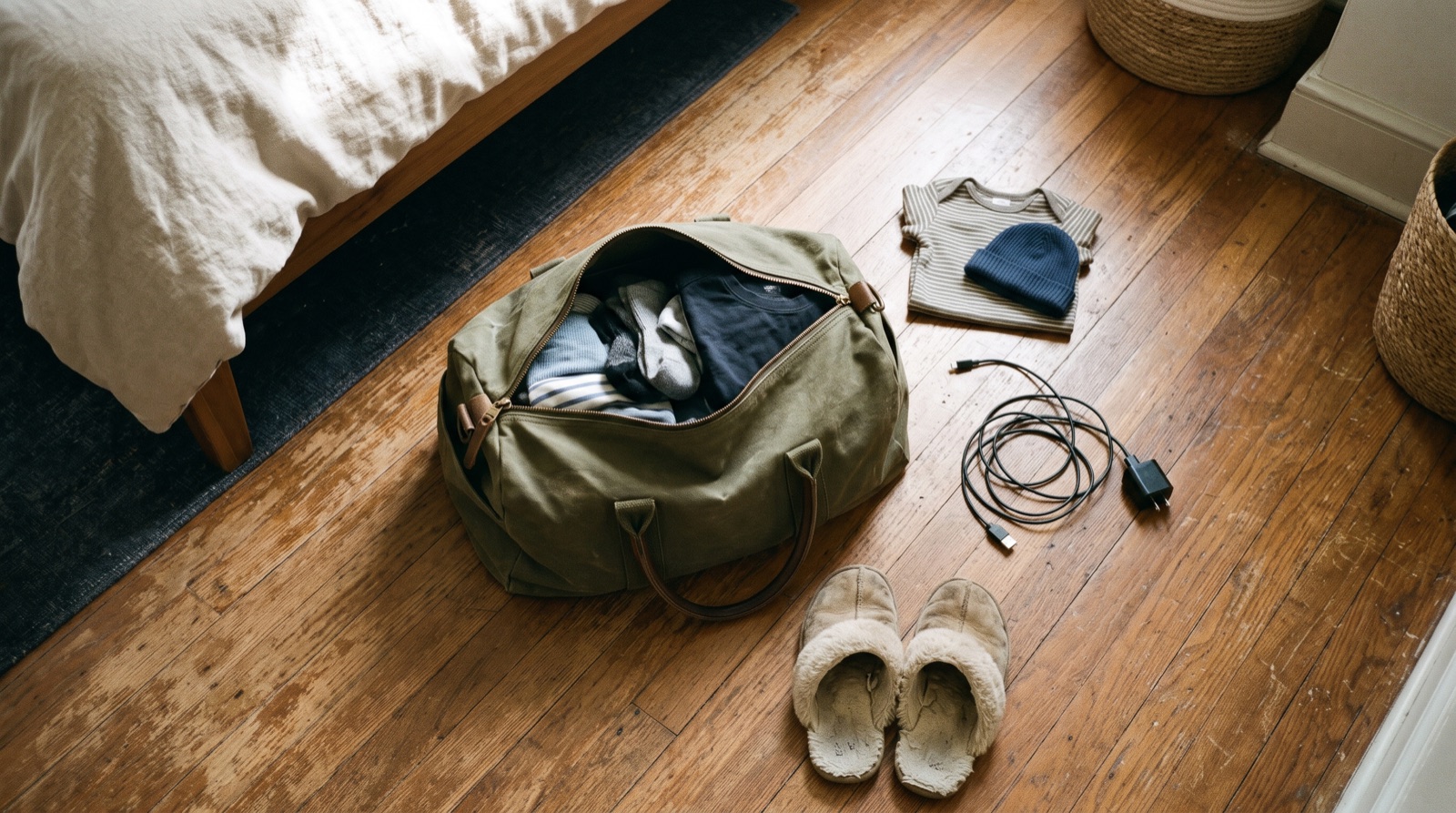
Search “hospital bag checklist” and you’ll find lists with sixty items, matching robes, a curated snack board and a ring light. You do not need a ring light.
What you need is a bag you can grab at 2 am without thinking, holding the handful of things that make a long, strange stretch of hours a little more comfortable. Here’s our list of the 14 things that tend to actually come out of the bag, and a few that usually come home untouched.
One note before you start: hospitals and birth centers differ a lot in what they provide. Many supply pads, mesh underwear, diapers and basic toiletries for you and the baby. Ask at a prenatal appointment or on a tour, and pack around the answer.
The 14 things worth packing
The paperwork
- ID, insurance card and any hospital forms. Put them in a zip pocket and don’t move them. If you’ve pre-registered, bring the confirmation anyway.
- A copy of your birth preferences, if you have them. One page, short bullets. It’s for the nurse who comes on shift at 7 pm and has never met you.
For you
- A long phone charging cable. Hospital outlets are always behind the bed, never next to it. This is the item people most often wish they’d packed.
- Lip balm. Hospital air is dry, and labor involves a lot of breathing.
- Your own pillow, in a bright pillowcase. The bright case keeps it from getting swept up with the hospital laundry.
- Slippers or slides and warm socks. Floors are cold and you’ll be shuffling to the bathroom a lot.
- Something loose and dark to wear home. Think of the clothes you wore at around six months pregnant. Your body won’t snap back by discharge day, and it isn’t supposed to.
- A nursing bra or soft stretchy bra. Even if you’re planning to formula feed, something soft and supportive is welcome when your milk comes in.
- Basic toiletries. Toothbrush, toothpaste, deodorant, hair ties, glasses or contacts. The first shower afterward feels incredible, and you’ll want your own things for it.
- Snacks for the support person. Labor can be long, and the cafeteria is rarely open when you need it. Granola bars, nuts, something with sugar in it.
For the baby
- An installed car seat. Technically not in the bag, but most hospitals won’t let you leave by car without one. Install it weeks ahead, and if you can, have it checked by a certified car seat technician.
- One or two going-home outfits, in two sizes. Newborn and 0–3 months, because nobody knows yet. Choose something with snaps or a zip, not twenty tiny buttons.
- A warm layer or blanket for the ride home, depending on the weather. Keep bulky coats off in the car seat; layer a blanket over the buckled straps instead.
For the waiting
- Something to pass the time. A downloaded show, a playlist, headphones. Early labor and the recovery room can both involve long stretches of not much happening.
Things that often come home unused
- A full outfit for every day. You’ll likely live in a hospital gown and your own robe or a big T-shirt.
- Makeup and a hair dryer. Bring them if they make you feel like yourself. Just know a lot of people never unzip that bag.
- Several baby outfits. The baby will mostly wear a hospital shirt, a diaper and a swaddle.
- Diapers and wipes, if your hospital provides them. Ask first.
- Books you meant to read. Optimistic. Lovely. Probably not.
Packing tips that save the 2 am scramble
Pack by around 36 weeks. Babies don’t read due dates. Having the bag ready early takes one worry off the list.
Use a “last-minute” sticky note. Some things you use daily can’t be packed in advance: your phone charger, glasses, medication. Write them on a note and stick it to the bag or the front door.
Keep the support person’s stuff separate. A small second bag with their change of clothes, toothbrush and snacks means nobody’s rummaging through your things for a granola bar.
Put it by the door, or in the car. Picture the moment: contractions are closer together, someone’s looking for shoes, and someone else is asking “where’s the bag?” It should be in exactly one place, and everyone should know where.
The bag doesn’t have to be perfect
If you forget something, it’s fine. Hospitals have most of what you’ll truly need, and someone can bring the rest. Plenty of babies have been born to parents who packed three wildly impractical items and no phone charger.
The point of the bag isn’t to be ready for everything. It’s to make a few hours a little softer. Pack what makes you feel comfortable and cared for, ask your hospital what they provide, and then put it by the door and stop thinking about it.
If anything about your pregnancy or labor plans feels uncertain, from when to head in to what the hospital expects you to bring, your doctor or midwife is the right person to ask. They get this question all the time.
Keep reading

Telling your first kid a sibling is coming
What to say, and when, to a two-year-old, a five-year-old and a ten-year-old who are about to stop being the only one.
The Parent ChroniclesSep 20, 2026 · 5 min read
The fourth trimester nobody plans for
You planned the birth down to the playlist. Here's what the first twelve weeks after it actually ask of you, and how to split the load before you're running on fumes.
The Parent ChroniclesSep 14, 2026 · 5 min read