
What our grandparents got right
Not everything from the old days deserves a comeback. But a handful of old-school habits are worth keeping, and they cost almost nothing.
 The Parent ChroniclesOct 26, 2026 · 4 min read
Let’s be clear upfront: plenty of what passed for parenting advice a few generations ago deserves to stay in the past. Car seats are good. Sunscreen is good. Kids are not better off being seen and not heard.
But if you’ve ever watched a grandparent calmly hand a bored six-year-old a wooden spoon and a pot and walk away, you’ve probably felt it: some of the old ways were onto something. Here are the habits we think are worth keeping.
Boredom was allowed
Older generations didn’t treat a bored child as an emergency. “Go find something to do” was a complete answer.
There’s a lot to be said for that. Boredom is often where kids start making things up: forts, games, elaborate stories about the ants on the patio. If every quiet moment gets filled for them, they don’t get much practice filling it themselves.
Try it: next time you hear “I’m bored,” resist the urge to fix it. Say, “That’s okay. You’ll think of something.” Maybe point toward a box of art supplies, some cardboard or the backyard. Then go make a cup of tea.
Kids played outside, a lot
Long afternoons outside, in all weather, were the default for many earlier generations. Mud, sticks, bugs, scraped knees.
Today it’s widely recommended that kids get plenty of daily physical activity and time outdoors, and unstructured outdoor play is one of the easiest ways to get it. It doesn’t have to be a hike or a sports program. A backyard, a park, a patch of grass near the apartment building all count.
Try it: a “rain or shine” rule for some outside time every day, with the right clothes. A puddle is the best toy most kids have never been allowed to fully enjoy.
Everyone pitched in
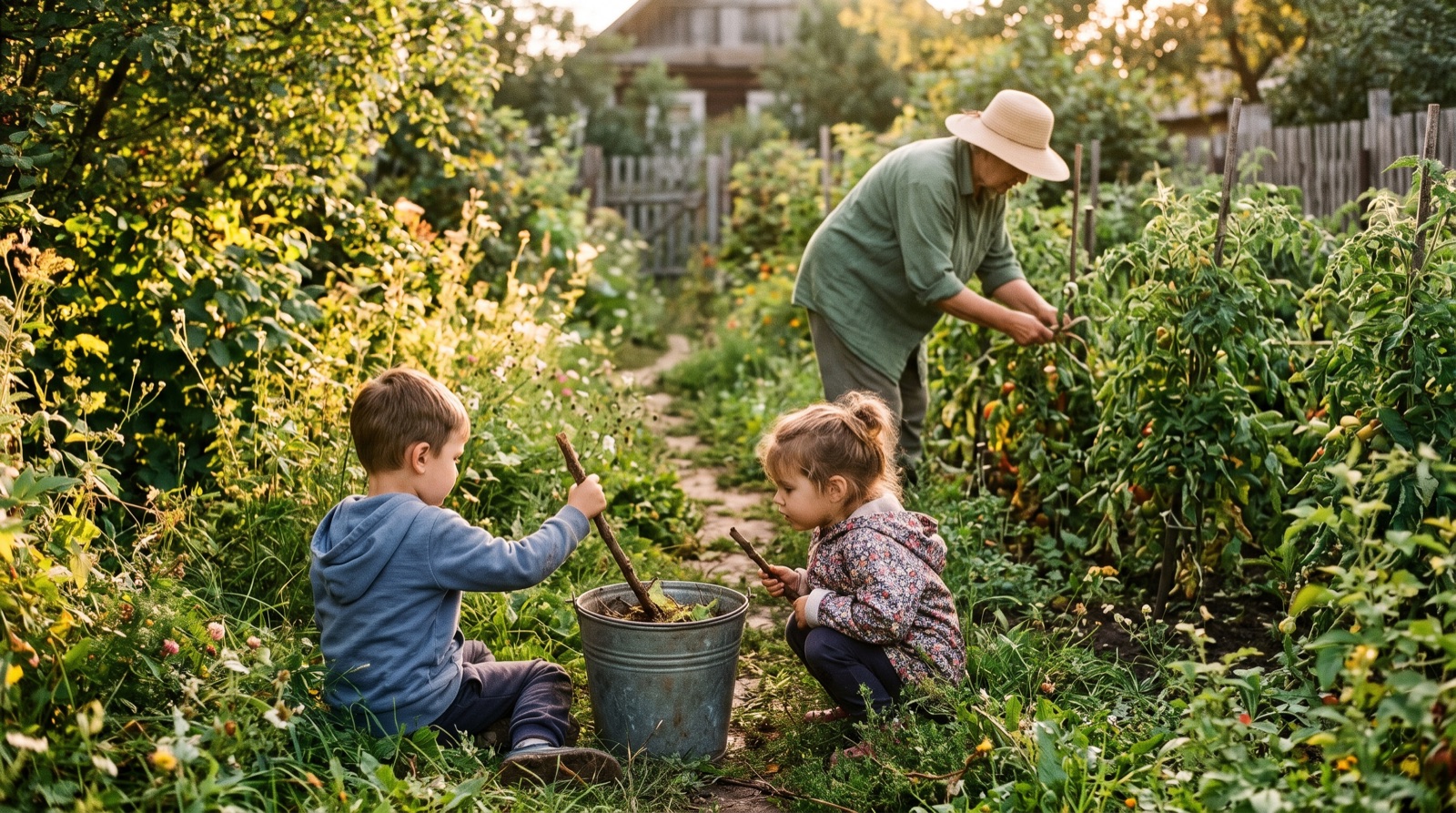
In a lot of older households, kids helped because the work needed doing. Shelling peas, hanging washing, sweeping the porch. No chore charts, no stickers. Just “come help me with this.”
That attitude, that a family is a team and everyone contributes, is worth keeping even if the chores have changed. Kids who help tend to feel capable and needed, and they learn real skills along the way.
Try it: stop asking “do you want to help?” and start saying “come help me with this.” Give them a real job, not a pretend one.
Meals were at the table
Many grandparents grew up with dinner at roughly the same time each day, at a table, together. Not every family can do that every night now, and that’s fine. But the habit itself, regularly sitting down and eating together, is one a lot of families find worth protecting.
It doesn’t need to be fancy. Toast and eggs count. What matters is the table, the conversation, and nobody scrolling.
Try it: pick two or three nights a week as “table nights.” Phones go in another room, including yours.
Things got fixed, not replaced
Darning socks, sewing on buttons, gluing the chair leg back on. Older generations tended to mend first and replace last, often out of necessity.
Fixing things with your kids teaches patience, resourcefulness and the quiet pride of “I made this work again.” It also saves money.
Try it: keep a small “fix-it box” with glue, tape, a needle and thread and a small screwdriver. When something breaks, ask your kid to help you repair it before anyone heads to the store.
Stories were told, not just read
Before screens, a lot of family entertainment was talk: stories about growing up, about relatives long gone, about the time the cow got loose. Those stories gave kids a sense of where they came from.
Try it: ask a grandparent or older relative to tell your kids about their childhood. Specific questions work best: “What did you do after school?” “What was the worst trouble you got into?” Record it if they’re comfortable with it. Those recordings become treasures.
Lower expectations, more patience
This one is harder to pin down, but you’ve probably seen it: grandparents often seem less rattled by spilled milk, tantrums and muddy shoes. Some of that is the luxury of not being on duty full-time. Some of it is perspective. They’ve seen how it turns out, and they know most of today’s emergencies won’t be remembered next week.
Try it: when something goes sideways, ask yourself, “Will this matter in a week?” If not, let your voice match that.
Keep what works, leave the rest
You don’t have to choose between modern parenting and old-school parenting. Keep the car seats, the sunscreen and the warmth. Borrow the boredom, the mud and the shared work. Your grandparents didn’t have everything figured out. But they knew a few things worth passing on, and now it’s your turn to pass them along.
Keep reading
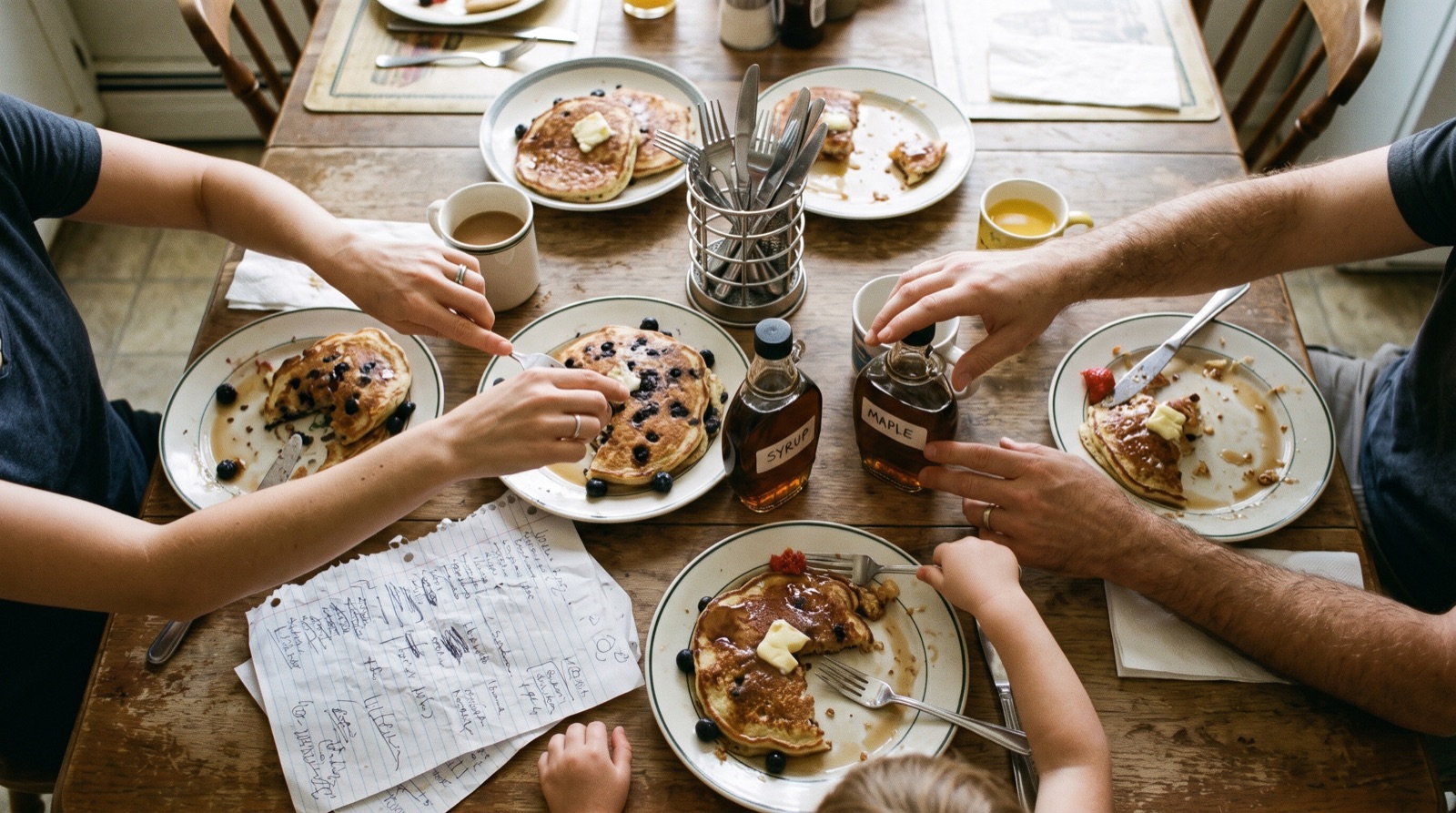
Family traditions you can start this year
The traditions that stick aren't the elaborate ones. They're small, repeatable and a little bit silly. Here are ideas you can start this month.
The Parent ChroniclesNov 1, 2026 · 4 min read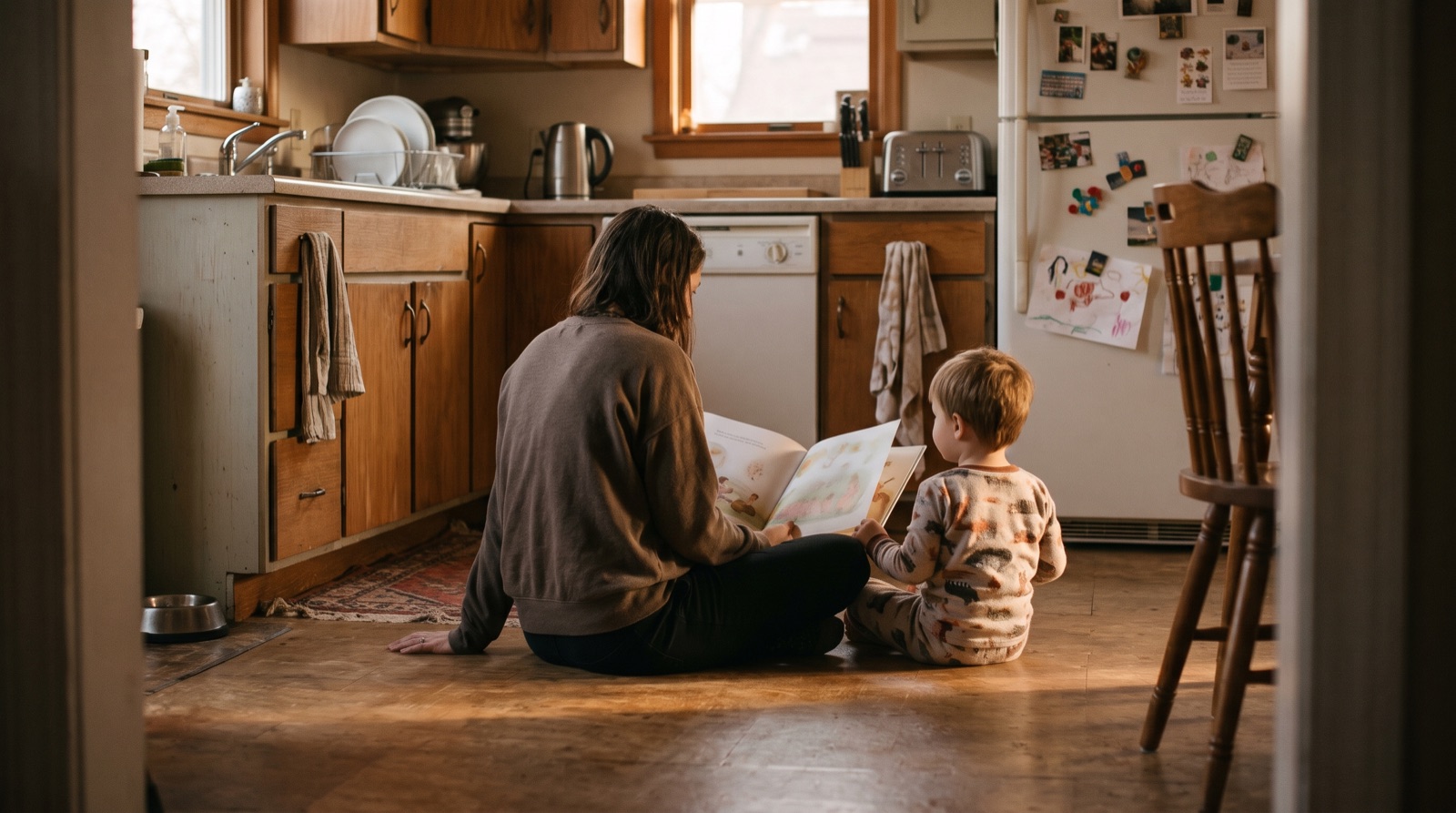
Raising bilingual kids when you're tired
You don't need flashcards or a perfect system to keep a home language alive. You need a few low-effort habits that survive a Tuesday night.
The Parent ChroniclesOct 29, 2026 · 4 min readWhat my grandmother's recipe box taught my kids
My kids found my grandmother's recipe box in the pantry. Half the cards just say things like "flour, enough" and "bake until it smells right." We tried her sweet bread anyway. It came out flat and a little burnt, and my daughter declared it "the best one." I think my grandmother would have agreed with her.