
Sensory-friendly outings that actually work
Planning a day out with fewer meltdowns (for everyone). A practical guide to timing, escape routes and the bag that saves the afternoon.
 The Parent ChroniclesOct 6, 2026 · 4 min read

Some kids walk into a busy museum and light up. Others walk into the same museum and hear every footstep, every hand dryer, every echo off the marble floor, all at full volume, all at once. If your child is in the second group, you already know that a “fun day out” can end forty minutes in, on the floor of the gift shop.
That doesn’t mean you stop going places. It means you plan the outing around the nervous system you’re actually bringing along, not the one the brochure assumes. Here’s what tends to help.
Pick the place for the senses, not the photos
Before you choose where to go, run it through four quick questions:
- How loud is it? Indoor pools, arcades and food courts are echo chambers. Outdoor spaces usually let sound drift away.
- How crowded is it? Crowds mean unpredictable touch, which is hard for a lot of sensory-sensitive kids.
- How bright and busy is it? Flashing screens and fluorescent lights can wear a child down without anyone noticing until it’s too late.
- Can you leave easily? A place with a quick exit is worth more than a place with a better playground.
A small nature center beats a huge aquarium on a holiday weekend. A library story time beats a crowded birthday party at a trampoline park. That isn’t settling. It’s choosing a place where your kid can actually enjoy themselves.
Go at the quiet hour
Timing does a lot of the heavy lifting. Most attractions are calmest right at opening on a weekday, or in the last hour before closing. Many museums, cinemas, zoos and even some supermarkets now run sensory-friendly hours or relaxed sessions, with lights dimmed, sound lowered and fewer people let in. It’s worth a quick look at the venue’s website or a phone call to ask.
When you call, ask the boring practical questions too: Is there a quiet room? Where are the bathrooms, and do they have loud hand dryers? Can we bring our own food? Staff are usually glad to help, and the answers will shape your whole plan.
Preview the day
Surprises are hard for a lot of kids. A little preview turns “somewhere new” into “somewhere I’ve sort of been.”
- Look at photos or a video of the place together the night before.
- Talk through the order of the day: “First the car, then the butterflies, then snack on the bench, then home.”
- For some kids a simple picture schedule on your phone or a folded card helps them track where they are in the plan.
- Name the exit plan out loud: “If it gets too loud, we can go outside and sit by the fountain.”
That last one matters more than it seems. Knowing there’s a way out often makes it easier to stay.
Pack the regulation kit
Think of this as the bag you’d grab for a power outage, but for feelings. Adjust it to your child, but a typical kit includes:
- Noise-reducing headphones or earplugs
- Sunglasses or a hat with a brim
- A familiar comfort item or fidget
- Safe snacks (the ones they’ll actually eat when stressed, not the ones you wish they’d eat)
- A water bottle
- A change of clothes, because wet sleeves or a scratchy tag can tip a good day
- Wipes and a small towel
Keep it packed between outings so you’re not rebuilding it on the morning of.
Build in exits and breaks
Plan the outing shorter than you think it should be. Ninety minutes that ends on a high note is a better memory than four hours that ends in tears in the car park. Leaving while things are still going well isn’t failure. It’s how the next outing gets easier.
Schedule breaks on purpose: a bench, a quiet corner, a walk back to the car to sit with the doors open. For many kids, regular short breaks prevent the big crash later.
If you’re going with another adult, agree ahead of time who handles what. One of you can take a sibling to finish the exhibit while the other takes a break outside. Splitting up for twenty minutes is fine.
When a meltdown happens anyway
It will, sometimes. That’s not a sign you planned badly. A few things that usually help:
- Get to less. Less noise, less light, fewer people, fewer words. Move to the quietest spot you can find.
- Keep your voice low and your sentences short. This isn’t the moment for reasoning or consequences.
- Offer the kit. Headphones on, comfort item in hand, a sip of water.
- Ignore the audience. Strangers’ looks are their business. Your job is your kid.
Some families carry a small card that explains their child is autistic or has sensory needs, just so they don’t have to explain in the moment. Use it if it helps you; skip it if it doesn’t.
Count the wins differently
Success might look like twenty minutes at the farmers’ market and one new food tried. It might look like getting through the cinema trailers with headphones on and leaving before the film. That counts. Each outing that ends calmly teaches your child, and you, that new places can be okay.
If outings are consistently very hard, or you’re noticing new sensory struggles, it’s worth bringing up with your pediatrician or an occupational therapist. They can help you figure out what’s going on and suggest strategies tailored to your child.
And on the days it all goes sideways anyway? Go home, eat something, and try a smaller adventure next week. The point was never the outing. It was being out in the world together.
Keep reading
The day I stopped apologizing for my daughter's stims
Today at the grocery store my daughter flapped her hands and hummed all the way down the cereal aisle because she found the "good" oatmeal. A woman stared. For years I would have apologized. Today I just said, "She's happy," and kept pushing the cart. My daughter never noticed the woman at all. She was too busy being thrilled about oatmeal.

The IEP meeting, demystified
A table full of professionals, a stack of reports and a lot of acronyms. Here's what to bring, what to ask and what you're allowed to say at your child's IEP meeting.
The Parent ChroniclesOct 4, 2026 · 5 min read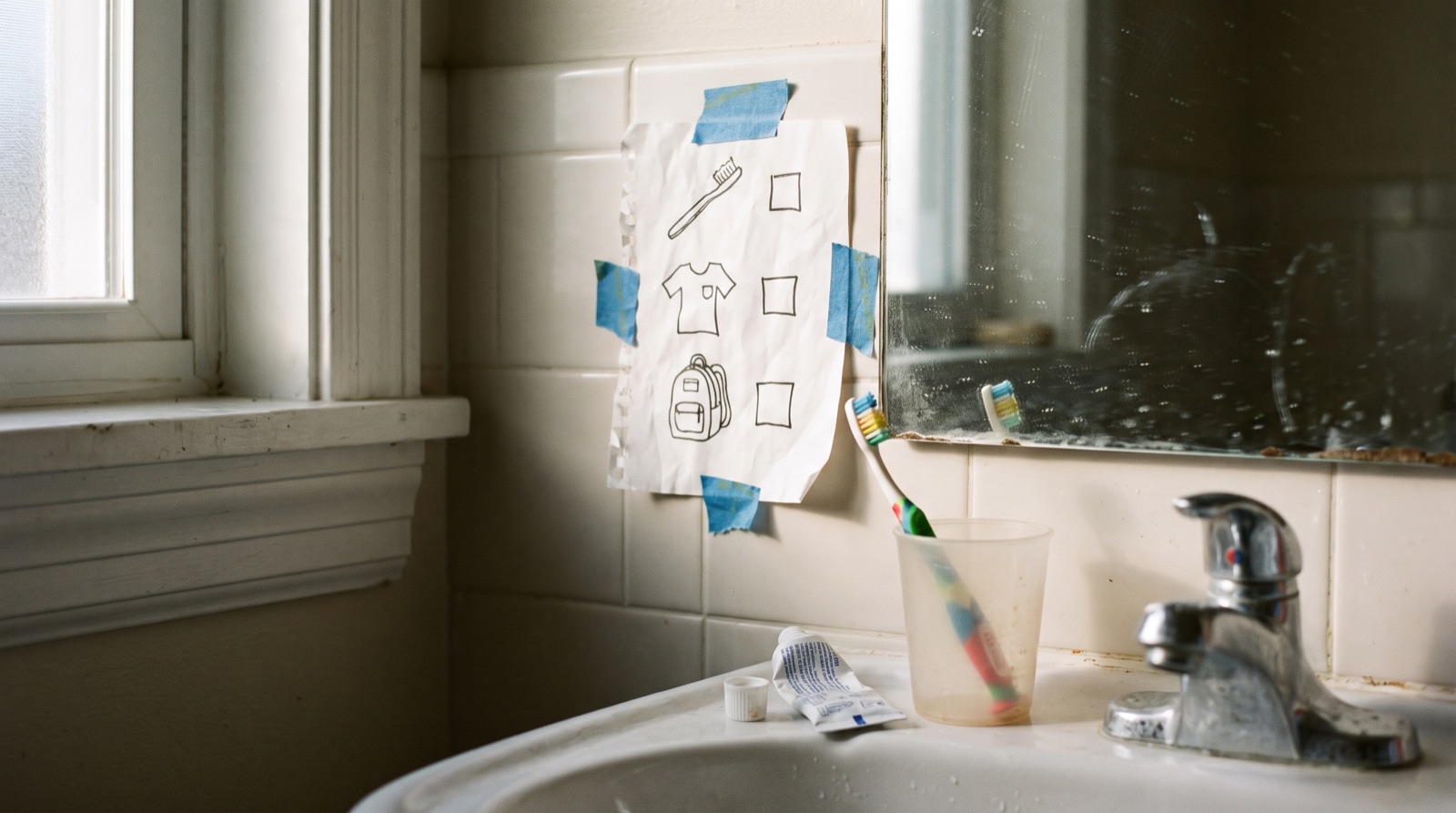
ADHD-friendly mornings: build the routine around the brain you have
If your mornings run on repeated reminders and rising voices, the problem may be the routine, not the kid. Visual cues, fewer decisions and outside help can change that.
The Parent ChroniclesOct 1, 2026 · 5 min read