
Building a village when you moved away from yours
No grandparents down the street, no old friends on call. How to find your people from scratch, one awkward hello at a time.
 The Parent ChroniclesNov 15, 2026 · 4 min read
“It takes a village” is lovely advice until you look around and realize your village is three time zones away. Your parents are a plane ride off. Your oldest friends are in group chats, not on the couch. And when the kid spikes a fever at 2 am, the list of people you can call is very short.
Plenty of families live this way now, because of jobs, housing, partners or just life. The good news: a village can be built. It takes a bit of awkwardness and a bit of time, but it can be done from scratch.
Rethink what a village is
The old picture is a big extended family within walking distance. The new picture is usually a patchwork:
- One or two friends close by who you could call in an emergency.
- A few “friendly faces” you see regularly: neighbors, school-gate parents, the barista who knows your kid’s name.
- Remote family and old friends who show up by phone and video.
- Paid or practical help like a babysitter, a pediatrician you trust, a reliable after-school program.
You don’t need dozens of close friends. You need enough people in each layer that no single person carries everything.
Go where the same people go
Friendship mostly grows from repeated, unplanned contact. Seeing the same faces again and again, in a low-pressure setting, until one of you finally says, “Do you want to grab coffee?”
So the strategy is less “meet new people” and more “become a regular somewhere.”
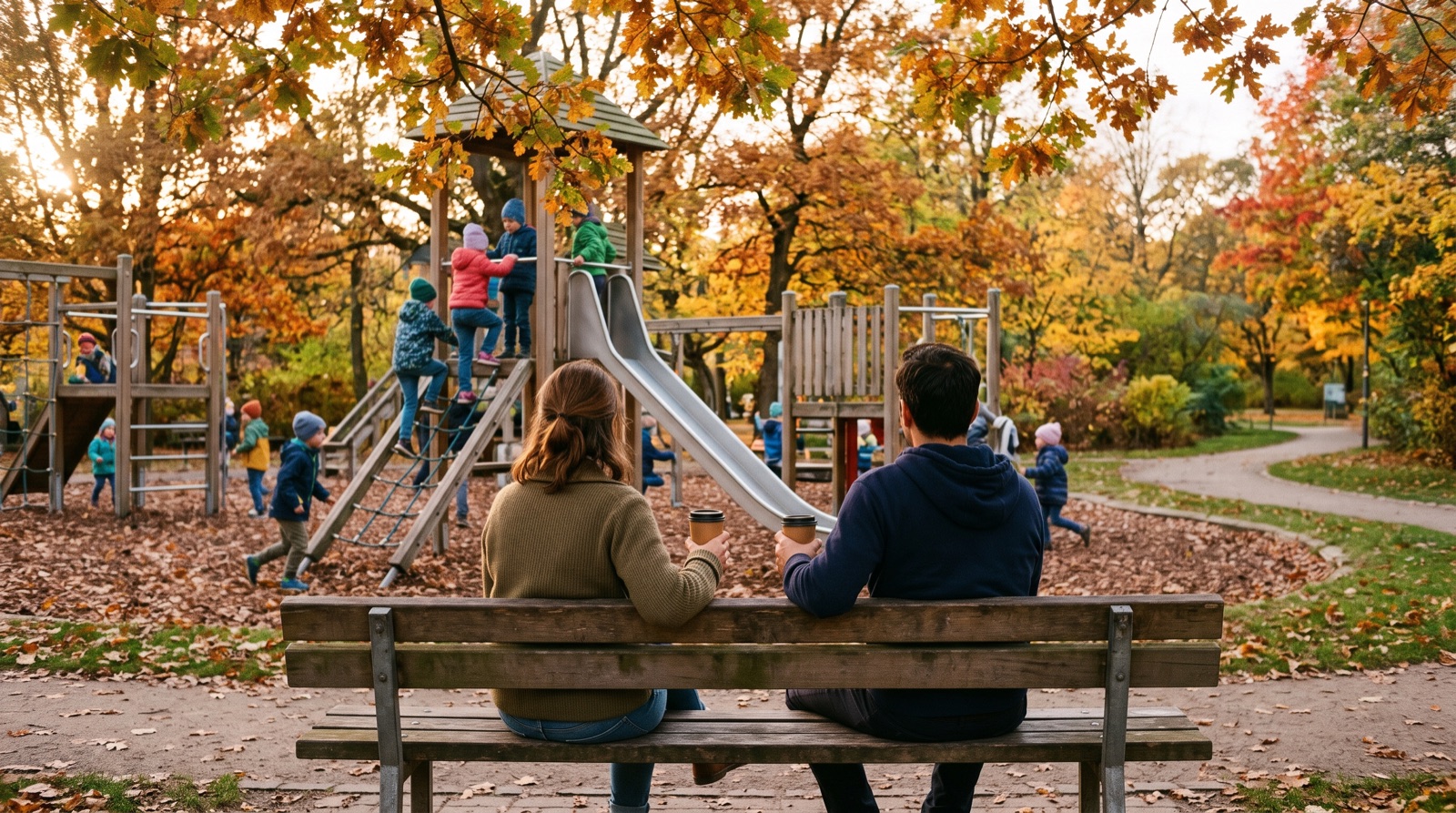
- The same playground, same time. Tuesday at 10 am, every week. You’ll start recognizing the other regulars within a month.
- Library story time. Free, recurring and full of parents with kids your age.
- School and daycare events. Drop-off, pickup, the bake sale, the volunteer sign-up sheet. Volunteering puts you in a room with the same people on purpose.
- Kids’ activities. Swim lessons, soccer, music class. Twelve weeks on the same sideline with the same parents is a friendship incubator.
- Places of worship and cultural groups, if that’s part of your life. Many have parent groups or family events built in.
- Your street. Say hi to neighbors. Learn their names. Wave at the dog-walkers.
Make the awkward first move
At some point, someone has to turn a familiar face into a friend. It might as well be you. Other parents are often just as lonely and just as hesitant.
Some low-stakes first moves:
- “Our kids seem to get along. Want to meet here again Thursday?”
- “We’re going to the farmers market Saturday morning, want to come?”
- “Can I get your number? I’d love to set up a playdate.”
Most people say yes. Some won’t follow through, and that’s not about you. Keep inviting. It usually takes a few tries before something sticks.
Become the host
One of the fastest ways to build a village is to create the gathering you wish existed.
- A standing park meetup. “Saturdays at 9, the big playground, bring coffee.” Post it in a school or neighborhood group and show up even if nobody comes the first time.
- A rotating dinner. Two or three families take turns hosting a simple meal once a month. Pizza counts.
- A front-yard hangout. Put out a few chairs and some chalk on a warm afternoon. Neighbors will drift over.
Hosting doesn’t need to be fancy. People are hungry for an excuse to connect. Being the one who provides it makes you the center of a village, not just a member.
Trade help early
Villages run on small favors. Don’t wait for an emergency to start trading.
- Offer to grab a neighbor’s kid on a school pickup.
- Swap babysitting with another family: you take their kids one Friday night, they take yours the next.
- Lend the ladder. Borrow the cake pan. Return it with cookies.
Each small exchange builds trust. Then, when the 2 am fever happens, you’ll have someone to call.
Keep the old village close
Moving away doesn’t mean losing your people. It means changing how you show up for each other.
- A standing call with grandparents or a sibling. Same day every week.
- Let grandparents read bedtime stories over video.
- Send small, frequent updates: a photo, a voice note, a funny thing the baby did.
- Plan visits in both directions, even short ones.
Be patient with yourself
Building a village from scratch is slow. Friendships tend to take months of regular contact before they feel solid, and the first year in a new place is often the loneliest. If you feel isolated, that’s not a sign you’re doing it wrong. It’s a sign you’re in the middle of it.
If the loneliness tips into something heavier, like persistent low mood or trouble getting through the day, talk to your doctor. That’s part of your village too.
Keep showing up. Keep waving. Keep inviting. One day you’ll realize you have someone to call, and they have you.
Keep reading

Checking on the parents in your life
A friend has a new baby, a sick kid or just a brutal season. Here are small, specific ways to show up that actually help, and how to keep showing up.
The Parent ChroniclesNov 17, 2026 · 4 min read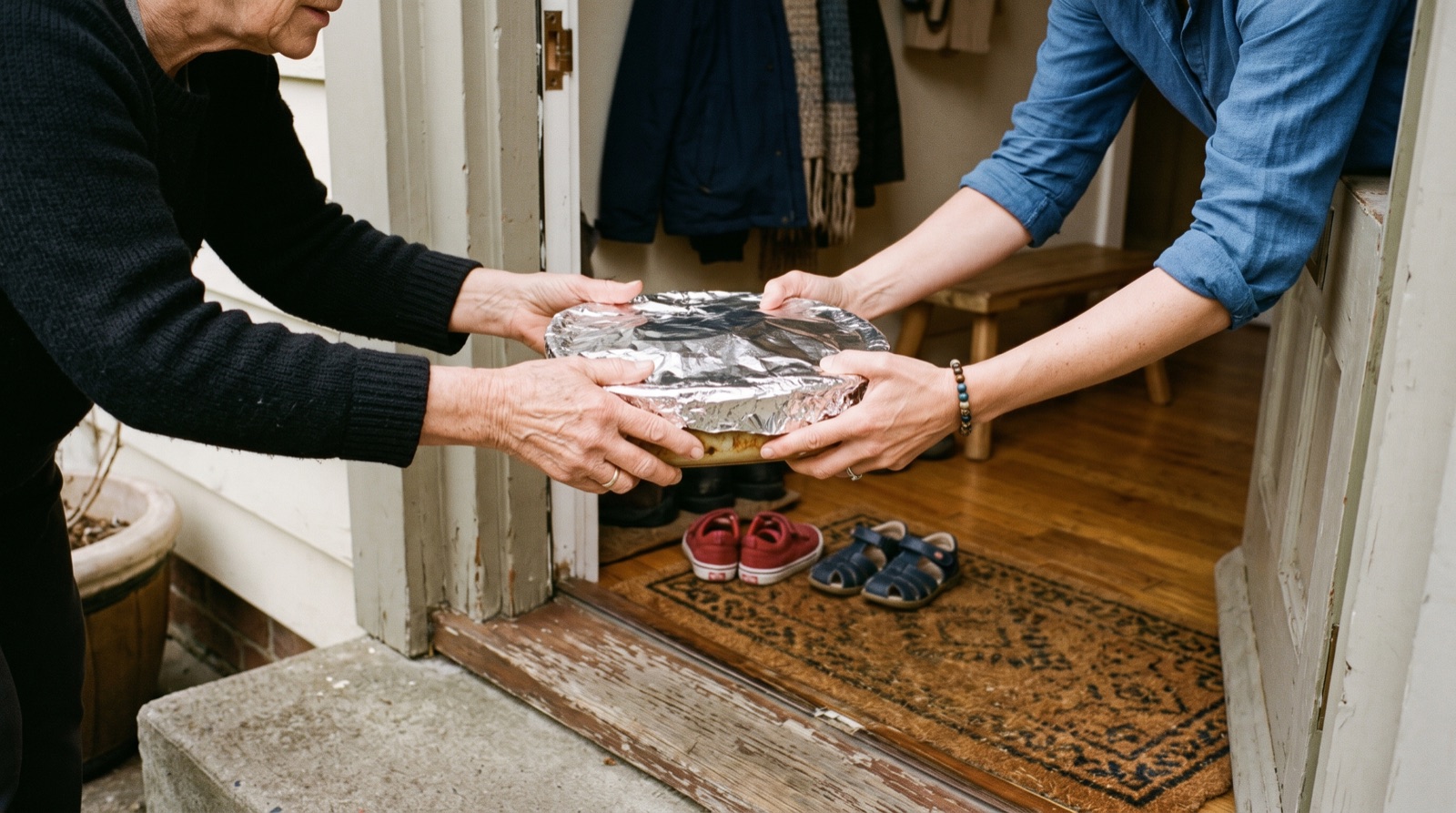
How to ask for help (and actually take it)
For the parent who always says "I'm fine, thanks." A practical guide to asking for help, with scripts you can copy, and how to accept it without guilt.
The Parent ChroniclesNov 12, 2026 · 4 min readThe neighbor who brought soup
Both kids had the stomach bug, my partner was away and I hadn't slept in two days. Someone knocked. It was the neighbor I'd only ever waved at, holding a pot of soup and a box of crackers. She said, "I could hear the coughing through the wall," and left before I could cry. I'm returning the pot tomorrow, full of cookies.